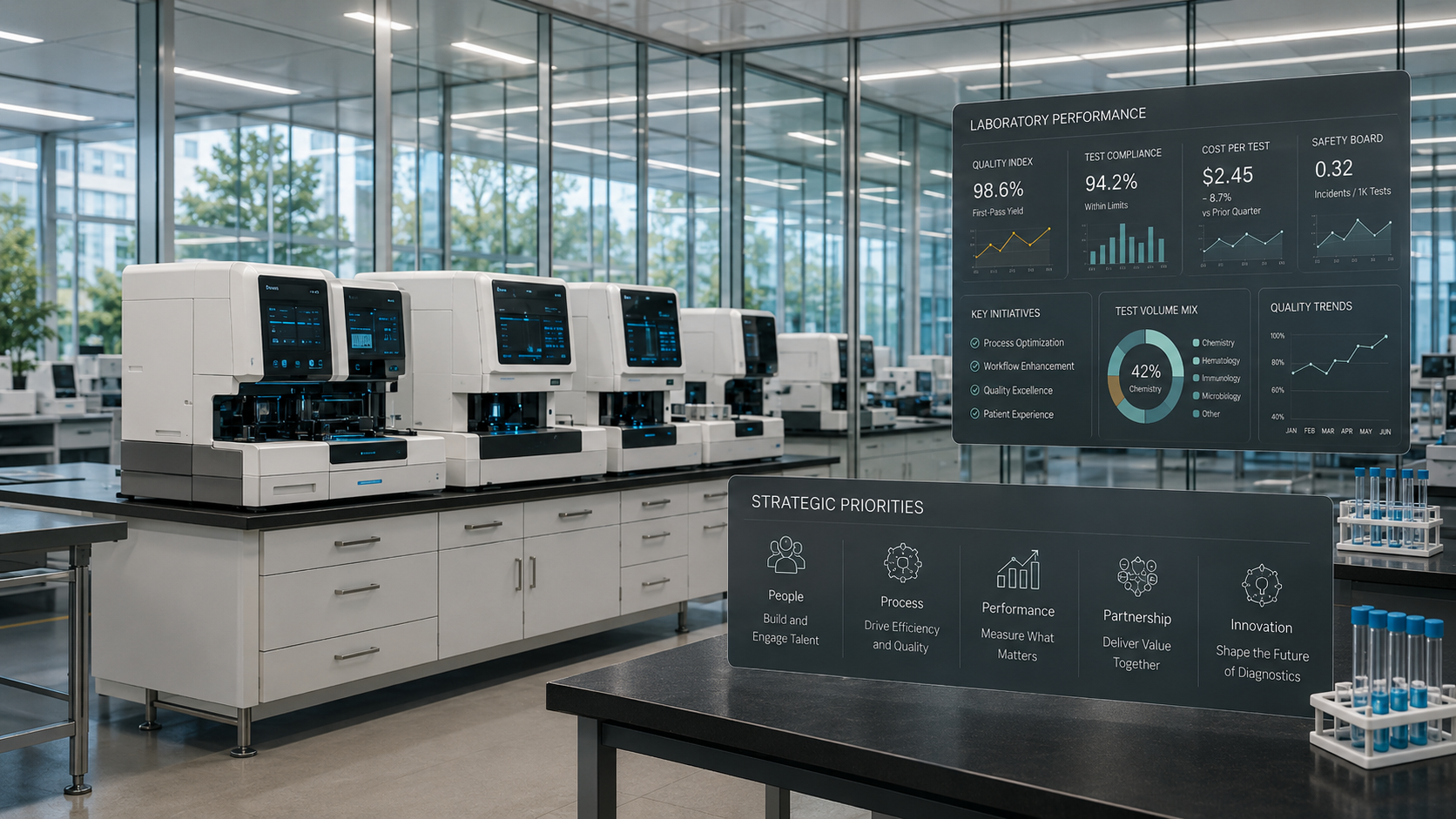
Lead the laboratory, not just the science.
A three-day applied leadership residency followed by four weeks of Virtual Cohort Sessions, designed for laboratory professionals assuming broader responsibility for operations, people and organizational performance — before the stakes are real.
Technical expertise gets you to leadership. It doesn't prepare you for everything that happens once you get there.
Laboratory directors and managers inherit regulatory responsibility, quality systems, staffing pressures, financial constraints, operational bottlenecks, difficult personnel decisions and relationships across the health system. Real laboratories do not present one clean problem at a time — and most leaders have had limited opportunity to practice managing them together before becoming accountable for them.
Participants don't simply learn management concepts. They examine a functioning laboratory, decide what deserves attention, allocate limited resources, and defend the recommendation under questioning — then take the same lenses back to their own laboratories.
How do I know whether my laboratory is performing well?
Where should I spend my attention first?
How do I lead people while managing the operation?
How do I get things done when the decision isn't entirely mine?
How do I position the laboratory within the organization?
Three days. Three levels of responsibility.
Each day pairs facilitated instruction with applied work inside Lab Command. Sessions below indicate the shape of each day; the final agenda is confirmed with each cohort.
What you are accountable for
The responsibilities that change when someone becomes accountable for the laboratory as a whole.
Conduct a director-level assessment — distinguishing isolated findings from systemic exposure, and deciding what belongs in routine leadership surveillance.
Closes with the question the day is built around: what should a laboratory director know, and how would you know it?
How the laboratory actually runs
Moving from monitoring performance to understanding the system producing it. The objective is not more metrics — it is learning to diagnose.
Face conditions that cannot all be addressed at once — allocating limited leadership attention and defending what you chose not to address.
Closes on the diagnostic habit: what is the problem underneath the number?
How you lead it
The laboratory doesn't improve because the director found the problem. It improves because people move.
Define priorities and build a 90-day leadership agenda you can take back to your own laboratory.
Closes with the transition into the Virtual Cohort Sessions.
Then take the work home.
For four weeks after the residency, the cohort meets weekly and virtually. Participants apply the same management lenses to their own laboratories — gathering their own evidence, comparing what they found, and working through it with the group.
These are not additional lectures. Each participant brings their own laboratory to the table, and the work of the month is turning what they find into a small number of priorities they intend to act on.
What participants leave with.
Director's Line of Sight
A framework for what deserves routine leadership visibility — and what does not.
Laboratory Leadership Scorecard
A cohort-built set of measures across the critical management domains.
Laboratory baseline assessment
A structured assessment of where your own laboratory currently stands.
90-day leadership agenda
Priorities, evidence, actions, delegations, resources, stakeholders and measures — including what you deferred on purpose.
Peer cohort network
Laboratory leaders who worked the same framework in different organizations.
Certificate of completion
Issued at the end of the four-week cohort period.
Register interest
Cohorts are forming now. Tell us a little about your role and we'll send the details.
Bring the Institute to your organization.
Delivered as a private cohort for health systems, hospital laboratories and academic medical centers — developing multiple leaders through a common framework while examining shared organizational challenges.
Quoted by scope — group size, number of days, and whether the Virtual Cohort Sessions are included.
Inquire about a private cohort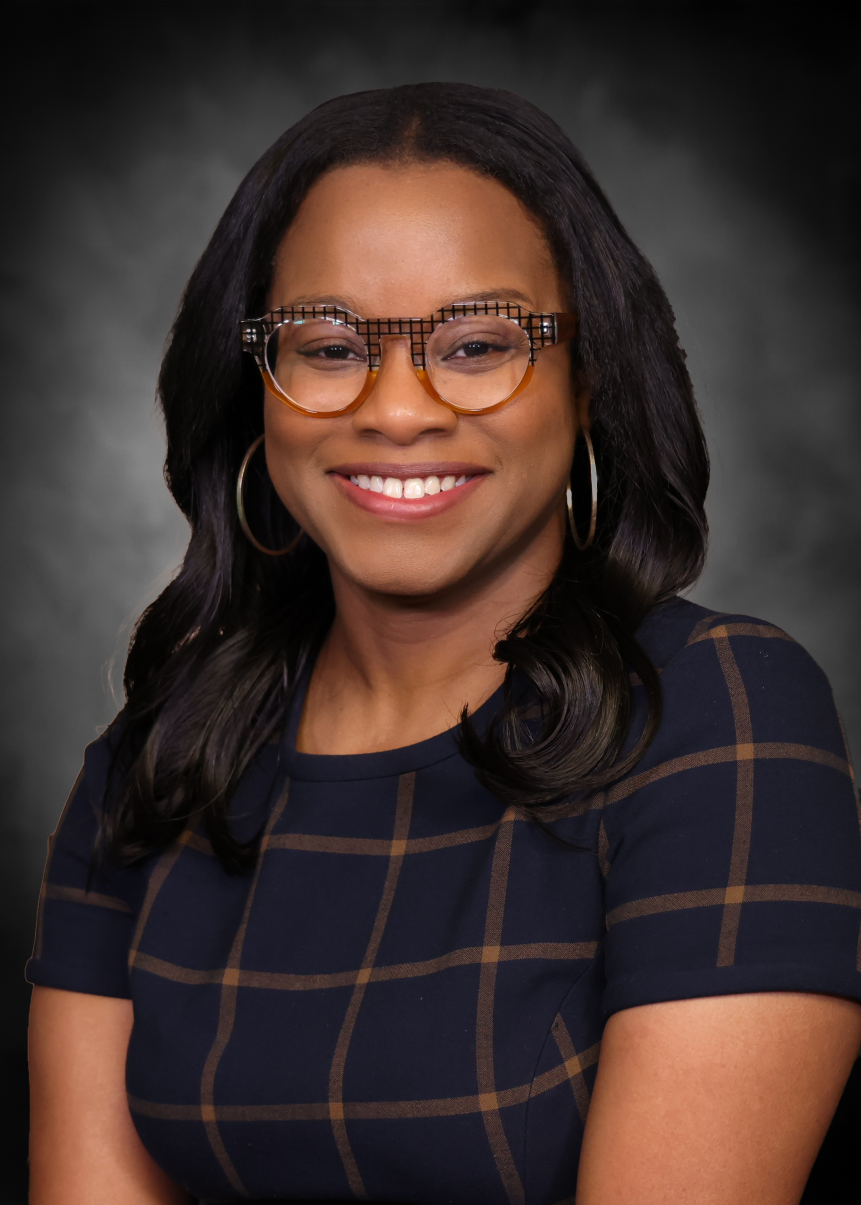
Guest faculty join selected cohorts for the leadership and team components.
Know the requirements. Then practice directing the laboratory.
The Institute is not designed as another regulation course. It uses Lab Command to connect director responsibilities with the operational, people and leadership decisions required to run a laboratory — where a technically correct recommendation can still fail if it ignores timing, relationships, authority or organizational readiness.